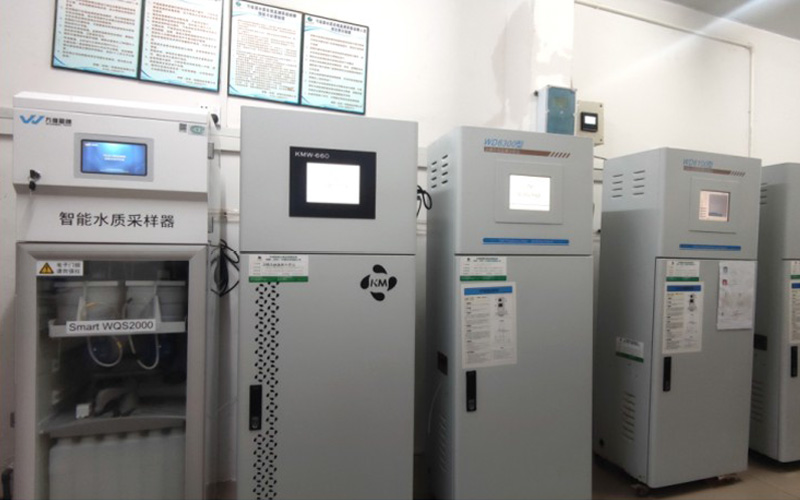
As an important tool for environmental monitoring, the total phosphorus online monitoring instrument plays a crucial role in water pollution control. It achieves real-time and accurate monitoring of total phosphorus content in water quality through a series of precise steps and processes. Next, we will discuss in detail the workflow of the total phosphorus online monitoring device to help everyone better understand its operating mechanism.
1. Water sample collection and pretreatment
The first step in online monitoring of total phosphorus is water sample collection and pretreatment. Monitoring devices are usually installed at different locations in water bodies and regularly collect water samples through pipelines or pumping systems. The collected water sample first passes through a filtering device to remove suspended solids and impurities, ensuring the accuracy of subsequent measurements. Subsequently, the water sample will be sent to a digestion unit for high-temperature and high-pressure treatment, which decomposes the organic matter in the water sample and converts total phosphorus from various forms into measurable phosphates. This step is crucial for ensuring the reliability of the measurement results, as it eliminates the influence of different forms of total phosphorus on the measurement.
2. Chemical reactions and color development
After the preprocessing is completed, the next steps are chemical reactions and color development processes. The digested water sample enters the reaction chamber where specific reagents are added. These reagents can react with phosphates in water samples to generate compounds with specific colors. The intensity of this color change is directly proportional to the total phosphorus concentration in the water sample. In order to enhance the color rendering effect, monitoring devices usually use heating, stirring, and other methods to promote sufficient reaction. By precisely controlling the reaction conditions, it can be ensured that the results of each measurement have a high degree of consistency and comparability.
3. Spectral analysis
After the color reaction is completed, the monitor will use spectral analysis technology to determine the absorbance or luminescence intensity of the reaction product. This step is the core link of online monitoring of total phosphorus, which directly determines the accuracy and sensitivity of the measurement results. Monitoring instruments are usually equipped with high-precision optical sensors, such as photodiodes, fiber optic spectrometers, etc., to capture the spectral characteristics of reaction products. By analyzing and calculating spectral data, information on the concentration of total phosphorus in water samples can be obtained. Modern total phosphorus online monitoring instruments often use advanced spectral analysis algorithms, which can accurately identify the signal of target substances under complex background interference, greatly improving the accuracy and stability of measurement.
4. Data processing and transmission
After obtaining spectral data, the microprocessor inside the monitor will process and analyze the data. It will convert the absorbance or luminescence intensity into a specific total phosphorus concentration value based on a pre-set calibration curve or mathematical model. This process involves complex data operations and algorithm optimization to ensure the accuracy and reliability of measurement results. At the same time, the monitoring device will also perform real-time monitoring and quality evaluation of the measurement data. Once abnormal values or deviations are detected, it will automatically sound an alarm and perform calibration to ensure the validity of the data. The processed data can be transmitted to remote monitoring systems or data centers through various methods for users to view and manage.
5. Display and Alarm
After data processing is completed, the total phosphorus online monitoring instrument will visually display the measurement results on the screen. Users can view real-time information such as current total phosphorus concentration and historical trend charts on the device interface, in order to timely grasp changes in water quality. At the same time, the monitoring device also has an alarm function. When the total phosphorus concentration in the water exceeds the standard, it will immediately issue an audible and visual alarm signal and notify relevant management personnel through SMS, email, and other means. This not only facilitates on-site operators to take timely measures, but also improves the intelligence level of the entire monitoring system.
6. Maintenance and upkeep
In order to ensure the long-term stable operation of the total phosphorus online monitoring instrument, it is necessary to regularly maintain and upkeep it. This includes cleaning the sampling pipeline, replacing consumables such as filter membranes and reagents, calibrating instruments, etc. Reasonable maintenance can not only extend the service life of equipment, reduce the probability of failure, but also ensure that measurement data always maintains high accuracy and reliability. In addition, with the continuous advancement of technology and the increasing demand for applications, many manufacturers also provide software upgrade services to help users unlock more advanced features and enhance their user experience.
The total phosphorus online monitoring instrument has become one of the indispensable technical means in the field of environmental protection due to its high efficiency and accuracy. Through the collaborative work of the above key links, it can quickly respond to changes in water quality, provide strong data support for government regulatory departments and enterprises, and help achieve the goals of water resource protection and sustainable development. In the future, with the application and promotion of new technologies such as the Internet of Things and big data, it is believed that these intelligent monitoring devices will play a greater role in more fields.

Runjin (Shenzhen) Environmental Technology Co., Ltd
Runjin (Shenzhen) Operation and Maintenance Center
Shenzhen Headquarters: No. 162 Shajiang Road, Xitou Community, Songgang Street, Bao'an District, Shenzhen, Guangdong Province (Building 2, Xinweirun High tech Park, 10th Floor, 1006)
Contact phone number: 19166393026
Kaiming KMW Water Quality Monitor Channel Cooperation Contact Number: 13828819385

Runjin Huanke WeChat official account
Channel distributors, please scan the code for consultation
 Service Hotline:19166393026