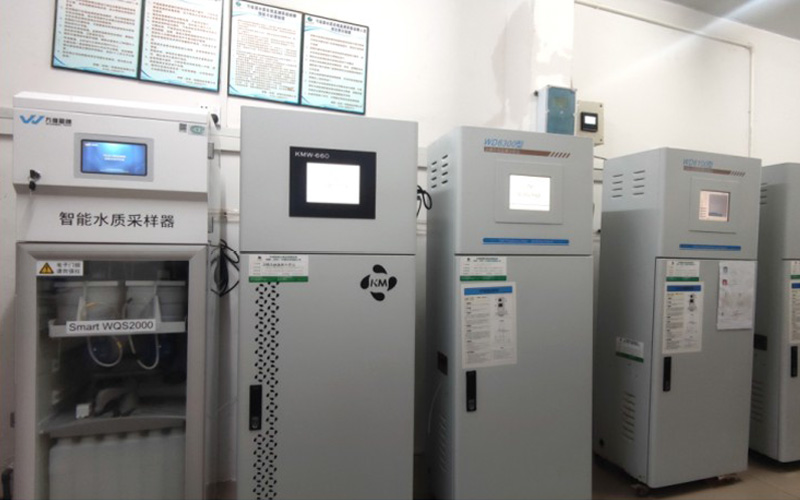
1、 Technical Overview
Chemical Oxygen Demand (COD) online monitoring is a key technology for real-time detection of organic pollutant content in water bodies through automated instruments. Its core principles include ultraviolet spectroscopy, electrochemical method, and high-temperature digestion colorimetric method, which achieve real-time data transmission through sensors and Internet of Things technology, providing dynamic basis for water quality supervision. For example, a certain industrial park adopts UV-254nm spectroscopy technology, which can achieve a monitoring frequency of once per minute with an error rate of less than 5%.
2、 Application scenarios
Industrial wastewater control: In industries such as petrochemicals and pharmaceuticals, the COD online monitoring system is linked to the discharge outlet. Once it exceeds the standard, an alarm is immediately triggered and the valve is closed. According to data from the Environmental Protection Department of a certain province in 2022, the number of violations of emissions by enterprises that install online monitoring has decreased by 63%.
Smart Water Management System: Combined with GIS maps, urban sewage treatment plants dynamically adjust aeration rates through COD data, reducing energy consumption by 15% -20%.
Emergency warning: A tributary of the Yangtze River was once found to have a 300% sudden increase in COD through online monitoring. After tracing the source, the spread of the chemical plant leakage accident was promptly blocked.
3、 Technical advantages
Efficiency improvement: Traditional laboratory testing takes 4-6 hours, while online monitoring compresses response time to 20 minutes.
Cost optimization: According to comparative data from a certain paper-making enterprise, the annual manual testing cost is 120000 yuan, while the online equipment maintenance cost is only 50000 yuan/year.
Data traceability: A monitoring platform with blockchain certification function can ensure that data cannot be tampered with and assist in environmental law enforcement and evidence collection.
4、 Challenges and Countermeasures
There are currently issues with probe scaling (such as electrode loss caused by high chlorine wastewater) and complex substrate interference. The countermeasures include:
Developing anti pollution nano coating sensors (such as graphene modified electrodes)
Introducing AI algorithms to automatically correct turbidity and chromaticity interference
Establish a three-level calibration system (standard sample actual water sample quality control sample)
5、 Future Trends
Miniaturization and Mobile Monitoring: Drones equipped with portable COD detectors are suitable for rapid response to sudden pollution incidents.
Multi parameter fusion: Integrated probes for COD, ammonia nitrogen, and total phosphorus will become mainstream, and a team from Tsinghua University has developed a nine in one water quality monitoring buoy.
Predictive maintenance: By analyzing equipment historical data through machine learning, sensor failures can be alerted 7 days in advance to reduce downtime.
COD online monitoring is transitioning from "data collection" to "intelligent decision-making". With the mandatory requirement of real-time monitoring in regulations such as the Yangtze River Protection Law, this technology will become the core tool to win the battle against pollution prevention and control, and promote water environment management to enter the era of "instant response".

Runjin (Shenzhen) Environmental Technology Co., Ltd
Runjin (Shenzhen) Operation and Maintenance Center
Shenzhen Headquarters: No. 162 Shajiang Road, Xitou Community, Songgang Street, Bao'an District, Shenzhen, Guangdong Province (Building 2, Xinweirun High tech Park, 10th Floor, 1006)
Contact phone number: 19166393026
Kaiming KMW Water Quality Monitor Channel Cooperation Contact Number: 13828819385

Runjin Huanke WeChat official account
Channel distributors, please scan the code for consultation
 Service Hotline:19166393026