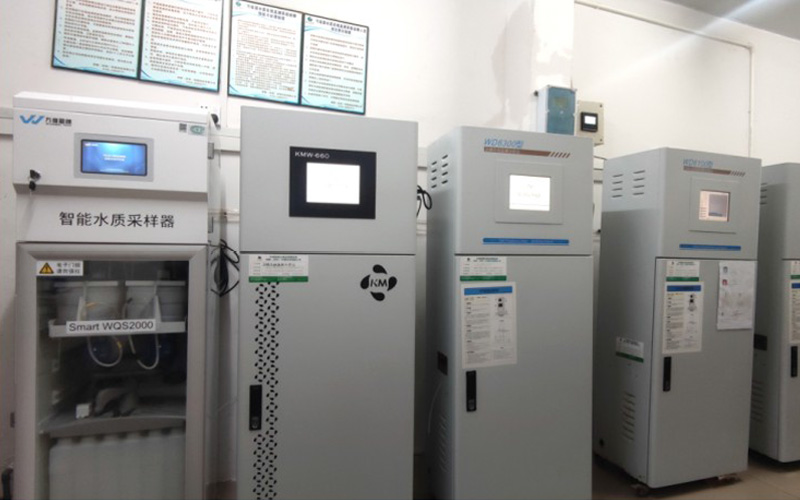
Some places illegally discharge domestic sewage into nearby karst caves, and some chemical industrial parks have characteristic pollutants in groundwater that exceed the scope of the park... Recently, reporters visited Shandong, Jiangxi and other places to learn that the situation of groundwater pollution in China is becoming increasingly complex, and the water quality needs to be improved.
In recent years, the pressure to prevent and control groundwater pollution risks in China has increased. However, the prevention and control of groundwater pollution face difficulties such as insufficient attention, poor management mechanisms, lack of special funds, and weak technical strength. Groundwater pollution is still in a state of "exposing one place and controlling one place", and there are shortcomings in source control.
Human factors are the main cause of groundwater pollution
According to research conducted by reporters, groundwater is the ultimate carrier of all pollution sources, with strong water concealment and difficult treatment. However, the current situation of groundwater quality in China is not optimistic.
The "2022 China Ecological Environment Status Bulletin" released in May 2023 shows that among the 1890 national groundwater environmental quality assessment points monitored nationwide, Class I-IV water quality points account for 77.6%, and Class V water quality points account for 22.4%. The main exceeding indicators affecting water quality are iron, sulfate, and chloride. The National Groundwater Monitoring Project Annual Report 2021 released by the Ministry of Natural Resources in January 2023 shows that among the 318 prefecture level administrative regions covered by effective data from the National Groundwater Monitoring Project, 127 cities have a majority of Class V groundwater quality.
The head of an ecological environment bureau in a certain city in Jiangxi Province stated that the risk of groundwater pollution diffusion caused by the chemical industry is relatively prominent. According to the national examination site and self-monitoring results, there is no Class V groundwater in the local national examination site. However, the groundwater quality of several production enterprise plots is monitored as Class V, and the pollution range of characteristic pollutants in some chemical concentration areas exceeds the boundary of the chemical park. Therefore, local anti-seepage inspections are being carried out on production enterprises and parks.
According to statistical analysis conducted by Professor Zhang Jing's team at the School of Environment, Harbin Institute of Technology, there were a total of 39 contaminated groundwater type drinking water sources in China from 2011 to 2020. Among them, 28 were located in the northern region, mainly concentrated in the Haihe River and Yellow River basins, with a higher number in Shaanxi, Shandong, Henan, and Hebei provinces.
On site monitoring personnel from Chengdu Ecological Environment Monitoring Center extracted water samples from Huanglongxi Ancient Town section of Jinjiang River. Data photos
The main ways in which groundwater is polluted are through the infiltration of pollutants into surface water or soil, indirectly causing pollution. There are also records of groundwater source pollution caused by wastewater recharge. Zhang Jing stated that the 43 groundwater source pollution accidents mentioned above were all caused by human factors, among which illegal discharge and dumping of solid waste by enterprises, production accidents were the main causes of pollution, accounting for 39% and 22% respectively. Pollution accidents caused by agricultural production and aquaculture also accounted for a large proportion.
In 2021, the central environmental inspection reported multiple cases of groundwater pollution caused by human factors. For example, the daily production of domestic sewage in Dafang County, Bijie City, Guizhou Province is about 28000 tons, but the actual treatment capacity is only 14000 tons per day. The local area illegally discharges sewage into nearby karst caves through three sewage channels, causing serious impacts on the unique karst ecosystem and groundwater; The Guzhen Economic Development Zone in Bengbu City, Anhui Province is located in the Huai River Basin. There are multiple sewage infiltration pits in the Guzhen Economic Development Zone and its surrounding farmland. Sampling and monitoring show that the chemical oxygen demand concentration and ammonia nitrogen concentration exceed the Class III standard for surface water by 496 times and 447 times, respectively, posing a serious threat to the groundwater environment.
Insufficient monitoring and prevention capabilities
According to research conducted by reporters, China started relatively late in the prevention and control of groundwater pollution, and currently faces difficulties such as insufficient attention, poor management mechanisms, lack of special funds, and weak technical strength.
Industry insiders point out that compared with developed countries, the standards, guidelines, and technical guidelines for investigating and evaluating the groundwater environment status of key regions and pollution sources, monitoring and early warning, and controlling and repairing groundwater pollution risks in production enterprises in China are not yet perfect. There is a lack of legal basis for controlling and repairing groundwater pollution risks in production enterprises, which leads to a gap in groundwater environment supervision in key regions and industries such as chemical industrial parks and mining areas. Taking a city in Shandong as an example, the coverage rate of local monitoring stations on water sources and key pollution sources is not high, only 25%.
Lack of funds is one of the reasons why some places cannot keep up with the prevention and control work. Some grassroots cadres have reported that the difficulty of groundwater treatment is much higher than that of surface water, but the existing funds for groundwater treatment in the local area only account for 10% -15% of the funds for water pollution prevention and control, making it difficult to promote the work. Taking the construction of a groundwater environmental monitoring well network as an example, this time-consuming and costly basic work is currently almost entirely supported by the government. The construction cost of a single monitoring well can reach hundreds of thousands of yuan, and the annual cost of well cleaning, sampling, laboratory monitoring, etc. involved in well opening is about 10000 yuan per well. Local construction and operation pressures are high.
In addition, the work related to groundwater is now scattered among departments such as ecological environment, natural resources, and water conservancy, and the barriers between departments have not been fully broken down. There are still shortcomings in data interconnection and intercommunication, and the 'one network' for groundwater supervision has not been established. Some grassroots cadres interviewed said that initially, groundwater management belonged to the natural resources department and mainly carried out work from the perspective of resource protection. After 2019, groundwater pollution prevention and control work was transferred to the ecological environment department, but the monitoring capacity and data foundation of the ecological environment department are relatively weak.
Professor Zhang Jing and others from the School of Environment at Harbin Institute of Technology analyzed that China's underground water environment detection capability is insufficient, and the online detection of water quality started relatively late. The technology and instruments for online monitoring of pollutants are not yet mature, and a complete emergency alarm system has not been formed. There is a lack of reserves for predictive and leading underground water pollution control technology models.
Several technical personnel from the 5th and 8th brigades of the Shandong Provincial Bureau of Geology and Mineral Resources, who are mainly responsible for investigating groundwater pollution in the Ningyang Economic Development Zone in Shandong Province, stated that the scope of groundwater pollution is fluctuating. If an accurate pollution range cannot be found, the cost of treatment will be very high, and the existing technical conditions are difficult to accurately investigate and characterize groundwater pollution, especially in heterogeneous, low-permeability and other geological conditions.
At the same time, due to the complexity and difficulty of groundwater pollution control, once contaminated, general remediation techniques can only eliminate the health risks of the population and cannot restore the function of water resources. The difficulty of controlling the spread of pollution in the distribution areas of fissure water and karst water is even greater. Taking the historical legacy mine water inflow control project in Ganxi River, Linwu County, Zhuzhou City, Hunan Province, as an example, the local area once issued a technical tender to the world. Some research teams "came with full confidence, but shook their heads repeatedly after seeing it" and have not found a particularly mature technical solution.
Need to strengthen collaboration and improve the ability to prevent and control at the source
The interviewee suggested establishing a "zoning management classification prevention and control" system for groundwater pollution prevention and control, delineating key areas for groundwater pollution prevention and control, and establishing a list of key polluting units for groundwater pollution prevention and control; Local governments take the lead in clarifying the responsibilities of local departments, and establish a normalized cooperation mechanism from the aspects of information sharing, pollution warning, and governance.
It is suggested to strengthen the research on groundwater pollution prevention and control technology, and focus on technical issues such as groundwater pollution investigation, monitoring and early warning, pollution tracing, risk control, and remediation. Li Wen, associate professor at North China University of Technology and member of the Chinese Chemical Society, stated that a multi-level and multi-level expert consultation system should be established, and business capacity training at the grassroots level should be increased to enhance the technological level of groundwater pollution prevention and control at the grassroots level.
Zhang Jing stated that conducting a survey on groundwater pollution status and identifying key pollution sources and surrounding groundwater pollution levels in batches and stages is particularly crucial. It is suggested to urge relevant enterprises to implement groundwater prevention and monitoring measures, and establish a mechanism for the interconnection and interoperability of existing facilities such as groundwater monitoring wells and drought resistant wells on the basis of continuously strengthening the construction of monitoring systems.
Wang Ting, a member of the Soil and Solid Waste Ecology Department of the Ecological Environment Bureau of Tai'an City, Shandong Province, suggested to deepen the delineation of groundwater drinking water source protection areas, strengthen the standardized construction of water source protection areas, and regularly conduct pollution investigations and assessments. In response to high-risk water sources, local governments are urged to adopt pollution prevention and control measures, water treatment plants, or replacement of water sources according to local conditions to ensure the safety of drinking water quality.
At the same time, Xu Lu, Deputy Minister of Emergency Environmental Protection Department of Ningyang Economic Development Zone in Shandong Province, and others suggested that relying on the media to increase publicity on the harm of groundwater pollution and the importance of prevention and control, and enhance public and enterprise awareness of groundwater protection. (Reporters Cheng Di, Yang Wen, Ni Yuanjin reporting from Beijing)
Source: Xinhua News Agency Client
Editor in Chief: Liu Chao

RJ(SZ)Technology Co., Ltd.
RJ(SZ) Operation and Maintenance Center
Shenzhen Headquarters: 2048, Silicon Bay Chip Design Center, No.1 Jingang Road, Wanggang Avenue, Shajing Street, Bao'an District, Shenzhen
Contact phone number: 18124079712
Kaiming KMW Water Quality Monitor Channel Cooperation Contact Number: 13828819385

Runjin Huanke WeChat official account
Channel distributors, please scan the code for consultation
 Service Hotline:18124079712