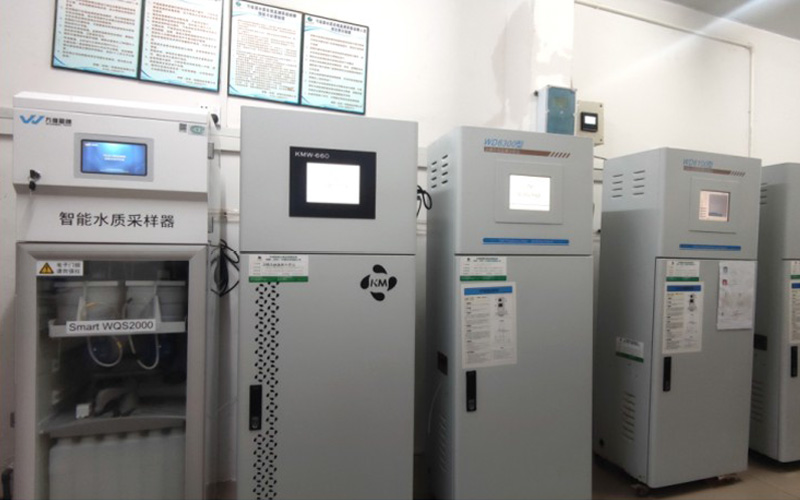
In the wave of industrialization and urbanization, we enjoy unprecedented convenience and comfort, but at the same time, we also face increasingly severe environmental challenges. The issue of air quality, as a prominent topic in this era, has quietly risen to the forefront of global attention. It concerns everyone's health and directly affects the ecological balance of the earth. Environmental gas monitoring, as an important means of assessing air quality and guiding pollution prevention and control, carries the human desire and pursuit for fresh air with every innovation and progress in its technology.

Looking back at the long river of history,Environmental gas monitoringThe development of technology has undergone profound changes from simplicity to precision, from singularity to diversity. Early detection equipment, such as simple chemical reagent kits, could preliminarily determine the presence of certain pollutants in the air, but their accuracy and timeliness were far from meeting the needs of modern society for environmental monitoring. With the rapid development of technology, electronic sensor technology has emerged, bringing revolutionary changes to environmental gas monitoring. These high-precision sensors can capture and analyze the concentration changes of various pollutants in the air in real time, providing scientific basis for environmental protection decisions.
Entering the 21st century, environmental gas monitoring has ushered in a new era of intelligence and networking. The integration of IoT technology enables monitoring devices to be widely deployed in various corners of cities, forming a dense monitoring network. Real time data is transmitted to cloud platforms, and through big data analysis and artificial intelligence algorithms, we can not only accurately grasp the dynamic changes in air quality, but also predict future trends, providing strong technical support for pollution warning and emergency response. At the same time, the introduction of satellite remote sensing technology has expanded the monitoring range to a global scale, allowing us to macroscopically grasp the health status of the Earth's atmospheric environment.
The importance of environmental gas monitoring is self-evident. It is the foundation for evaluating environmental quality, formulating environmental policies, and the key to maintaining public health and promoting sustainable development. By regularly monitoring the concentration of harmful gases in the air, such as sulfur dioxide, nitrogen oxides, particulate matter, etc., we can promptly identify pollution sources, take targeted emission reduction measures, and effectively improve air quality. In addition, monitoring data can provide valuable research materials for scientific research institutions, helping to explore the comprehensive impact of air pollution on ecosystems, climate change, and human health, and contributing to the construction of a greener and more harmonious living environment.
In recent years, a series of innovative environmental gas monitoring technologies have emerged, demonstrating the unlimited potential of technology in the field of environmental protection. For example, laser scattering technology has demonstrated excellent performance in fine particle monitoring due to its high sensitivity and fast response; Mass spectrometry analysis technology can accurately identify the complex organic compound composition in the air, providing a powerful tool for tracking the source of pollution. What is even more exciting is that the emergence of portable and low-cost environmental monitoring devices has enabled the general public to participate in air quality monitoring, forming a new social governance pattern of "everyone is a monitor".
Faced with the global challenge of air pollution, the power of technology is undoubtedly our strongest backing. However, technological innovation is only the first step. What is more important is to transform scientific and technological achievements into practical actions and promote the participation of all sectors of society in the great cause of environmental protection. The government should strengthen supervision, improve the environmental protection regulatory system, guide enterprises to adopt clean production technologies, and reduce pollutant emissions. Enterprises should actively fulfill their social responsibilities, increase investment in environmental protection, and explore new paths for green development. And every citizen is both a direct beneficiary and a participant in environmental protection. We can contribute to reducing air pollution by reducing the use of private cars, choosing green transportation methods, and participating in daily activities such as afforestation.
Looking ahead to the future, with the continuous advancement of technology and the increasing awareness of environmental protection among people, we have reason to believe that environmental gas monitoring technology will become more mature and perfect, air quality will continue to improve, and blue skies and white clouds will become the norm rather than a luxury. This is a long-term battle that requires the joint efforts of the whole society. Let us work together, led by technological innovation, to protect this blue sky and make fresh air a beautiful bridge connecting the past and the future.

Runjin (Shenzhen) Environmental Technology Co., Ltd
Runjin (Shenzhen) Operation and Maintenance Center
Shenzhen Headquarters: No. 162 Shajiang Road, Xitou Community, Songgang Street, Bao'an District, Shenzhen, Guangdong Province (Building 2, Xinweirun High tech Park, 10th Floor, 1006)
Contact phone number: 19166393026
Kaiming KMW Water Quality Monitor Channel Cooperation Contact Number: 13828819385

Runjin Huanke WeChat official account

Channel distributors, please scan the code for consultation
 Service Hotline:19166393026