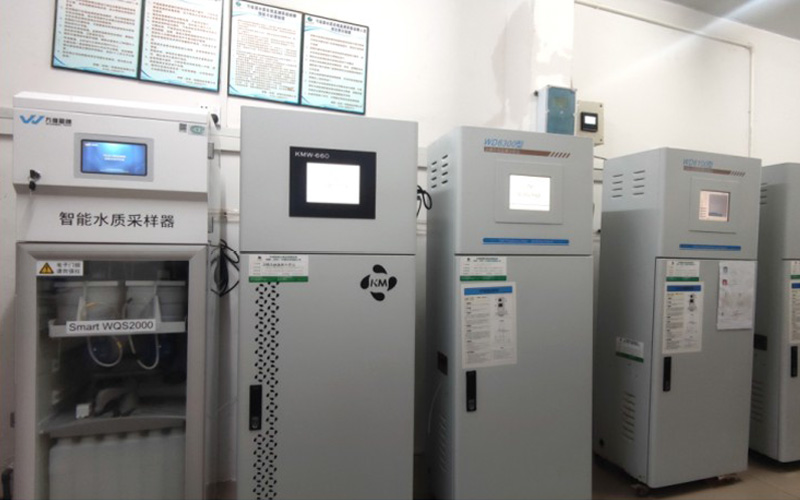
Water station monitoring and operation services are an important part of water resource management, ensuring water supply safety and environmental health through real-time monitoring of key indicators such as water quality and quantity. With the advancement of technology, the application of innovative technologies in water station monitoring is becoming increasingly widespread, which not only improves the accuracy and efficiency of monitoring, but also brings new solutions for operation and maintenance management.
The application of intelligent sensor technology is a major advancement in the field of water station monitoring. Traditional water quality monitoring relies on manual sampling and laboratory analysis, which is time-consuming and susceptible to human error. And intelligent sensors can collect real-time data such as water temperature, pH value, dissolved oxygen, etc., and transmit them to the monitoring center in real-time through wireless networks. The real-time and accurate nature of these data greatly improves the response speed of water quality monitoring, providing the possibility for rapid handling of potential pollution events.
The introduction of remote sensing technology provides a more macroscopic perspective for water station monitoring. Through high-precision sensors carried by satellites or drones, regular scanning of large areas of water can be carried out to monitor water quality trends and pollution source distribution. This technology is particularly suitable for monitoring remote areas or large water bodies, effectively addressing the issue of uneven distribution of ground monitoring stations.
The role of big data analysis in water station monitoring cannot be underestimated. By collecting and integrating data from different sources, such as meteorological information, industrial emission records, etc., combined with machine learning algorithms, future trends in water quality can be predicted, providing scientific basis for decision-making. At the same time, big data analysis can also help identify abnormal data points and timely discover potential problems.
The application of Internet of Things (IoT) technology in water station monitoring and operation has achieved interconnectivity between devices. By connecting various sensor nodes to a unified network platform, operation and maintenance personnel can remotely monitor the operating status of all devices. Once a fault or abnormality occurs, the system will automatically alarm and push notifications, greatly improving the efficiency and timeliness of maintenance work.
The combination of artificial intelligence (AI) and machine learning makes water station monitoring more intelligent. AI can perform deep learning based on historical data, continuously optimize prediction models, and improve the accuracy of predicting water quality changes. In addition, AI can assist in diagnosing complex water quality issues and provide targeted solution recommendations.
Blockchain technology has played an important role in ensuring data security. Due to its decentralized nature, blockchain can ensure that data transmission is not tampered with, ensuring the authenticity and integrity of monitoring data. This has significant value in building public trust and strengthening regulation.
Cloud computing technology provides powerful backend support for water station monitoring. With the elastic computing capability of cloud platforms, it is easy to meet the needs of large-scale data processing, while reducing the investment cost of local hardware facilities. The operations team can access cloud data and services through any networked device, achieving a flexible and efficient work mode.
Although the application of virtual reality (VR) and augmented reality (AR) technologies in the field of water station monitoring is still in its infancy, they have shown great potential. By utilizing these technologies, technicians can simulate complex operational scenarios in a virtual environment, conduct training exercises or rehearse emergency operation procedures, thereby improving their proficiency and safety in practical operations.
The application of innovative technologies is profoundly changing the face of water station monitoring and operation services. From intelligent sensors to remote sensing technology, from big data to the Internet of Things, and then to cutting-edge technologies such as AI, blockchain, cloud computing, and VR/AR, each is driving water resource management towards greater efficiency, precision, and intelligence. With the continuous development and improvement of these technologies, we have reason to believe that future water station monitoring will be more reliable and transparent, making greater contributions to the protection of precious water resources.

Runjin (Shenzhen) Environmental Technology Co., Ltd
Runjin (Shenzhen) Operation and Maintenance Center
Shenzhen Headquarters: No. 162 Shajiang Road, Xitou Community, Songgang Street, Bao'an District, Shenzhen, Guangdong Province (Building 2, Xinweirun High tech Park, 10th Floor, 1006)
Contact phone number: 19166393026
Kaiming KMW Water Quality Monitor Channel Cooperation Contact Number: 13828819385
Runjin Huanke WeChat official account
Channel distributors, please scan the code for consultation
 Service Hotline:19166393026