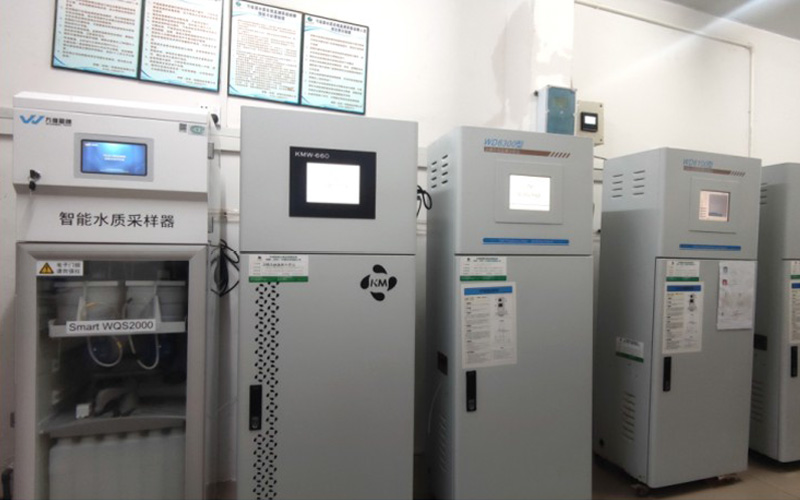
At the mouth of the Yangtze River, a group of metal probes shimmering with blue light are swallowing the river water at a frequency of three times per second. These seemingly silent instruments are actually intelligent monitoring systems with sixteen sensors working together, forming a digital neural network that is redefining the way humans perceive the water environment. Contemporary water quality monitoring technology has broken through the limitations of single point sampling analysis and evolved into an environmental perception system that integrates real-time tracking of physical, chemical, and biological indicators, like installing an intelligent eye that never tires for rivers and lakes.
1、 Multidimensional Perception: From Single Point Sampling to Stereoscopic Monitoring
Traditional water quality monitoring is like a blind man touching an elephant, and the scattered manual sampling data often conceals the true state of the water body. A comparative experiment conducted by an environmental protection agency in 2023 shows that in the same area of the Taihu Lake Lake, the fluctuation range of dissolved oxygen detected by traditional methods is 4.2-5.8mg/L. After the use of the multi parameter real-time monitoring system, the data accuracy is improved to two decimal places, and the minute fluctuation of 0.3mg/L caused by algae photosynthesis in the morning is more captured. The transition from "cross-sectional snapshot" to "continuous image" is due to three major breakthroughs in modern sensor technology: nanoscale semiconductor sensitive materials reduce the detection limit to ppb level; Microfluidic technology enables parallel analysis of multiple indicators in water samples with minimal upgrades; The self-cleaning ultrasonic oscillator extends the maintenance cycle of the sensor to 180 days.
2、 Intelligent Center: Decoding Vital Signs of Data Flow
At the the Pearl River Delta Water Quality Early Warning Center, not only the data, but also the vital signs of the water body are beating on the big screen. When the data of ammonia nitrogen sensor and pH sensor generate a correlation index of 0.82 at the edge computing node, the system automatically triggers the heavy metal detection module - this intelligent linkage between parameters is derived from the deep learning model embedded in the monitor. The practice of a certain smart water management platform has shown that by integrating satellite remote sensing, unmanned aerial vehicle aerial survey, and fixed monitoring point data, the pollution tracing time has been compressed from 72 hours to 4 hours. The monitoring device has evolved into a thinking environmental doctor, and its built-in LSTM neural network can predict the trend of blue-green algae outbreaks 3 hours in advance with an accuracy rate of 89%.
3、 Ecological Neural Network: Weaving Water Environment Perception Network
800 intelligent monitoring buoys in the Mississippi River Basin form a dynamic perception network, with each node being an ecological neuron that combines monitoring and communication functions. These devices equipped with LoRaWAN modules will build an emergency monitoring network during the 2023 floods, tracking the spread path of pollution groups in real time. The latest bionic monitoring device has broken through the technological boundaries: a water flow sensor that draws on the principle of fish lateral organs can recognize flow velocity changes of 0.01m/s; The biosensor simulating the tentacles of Hydra can directly detect the ecological toxicity of water bodies. This monitoring philosophy of dialogue with nature is taking root in 83 smart river and lake projects worldwide.
Standing at the forefront of digital twin watershed technology, multi parameter water quality monitoring instruments have surpassed their tool attributes and become a digital mirror of water ecosystems. When the the Taihu Lake Lake Treatment Project dynamically adjusts the ecological water supplement flow through real-time monitoring data, and when the effect of the Yangtze River fishing ban is automatically evaluated through the biodiversity index, we see not only the victory of technology, but also a new contract between human beings and nature. These flickering electronic pupils in the blue waves will eventually help us understand the story of every drop of water and reconstruct the poetic coexistence between humans and water.

Runjin (Shenzhen) Environmental Technology Co., Ltd
Runjin (Shenzhen) Operation and Maintenance Center
Shenzhen Headquarters: No. 162 Shajiang Road, Xitou Community, Songgang Street, Bao'an District, Shenzhen, Guangdong Province (Building 2, Xinweirun High tech Park, 10th Floor, 1006)
Contact phone number: 19166393026
Kaiming KMW Water Quality Monitor Channel Cooperation Contact Number: 13828819385
Runjin Huanke WeChat official account
Channel distributors, please scan the code for consultation
 Service Hotline:19166393026