 |


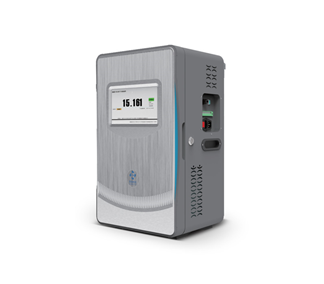
Analysis principle
A beam of parallel light propagates in a transparent liquid, and if there are no suspended particles in the liquid, the direction of the beam will not change when propagating in a straight line; If there are suspended particles, the beam will change direction when encountering particles (regardless of whether the particles are transparent or not). This forms what is called scattered light. The more particles (higher turbidity) there are, the more severe the scattering of light becomes. The turbidity meter emits light that passes through a section of the sample and detects how much light is scattered by particles in the water from a direction 900 degrees away from the incident light. This method of measuring scattered light is called scattering method.
The turbidity meter adopts the principle of 90 ° scattered light. When a parallel beam of light emitted by a light source passes through a solution, some of it is absorbed and scattered, while the other part passes through the solution. The scattered light intensity at a 90 ° angle to the incident light conforms to the Rayleigh formula.
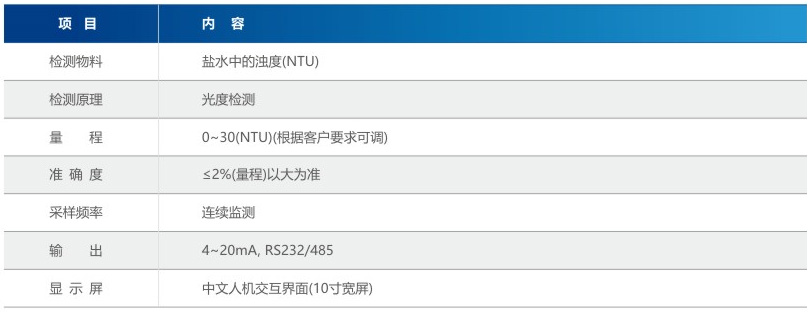
Product parameters (installed after filtration membrane)

RJ(SZ)Technology Co., Ltd.
RJ(SZ) Operation and Maintenance Center
Shenzhen Headquarters: 2048, Silicon Bay Chip Design Center, No.1 Jingang Road, Wanggang Avenue, Shajing Street, Bao'an District, Shenzhen
Contact phone number: 18124079712
Kaiming KMW Water Quality Monitor Channel Cooperation Contact Number: 13828819385

Runjin Huanke WeChat official account
Channel distributors, please scan the code for consultation
 Service Hotline:18124079712




 18124079712